A secure messaging app that keeps every customer conversation compliant
Tuvis is a mobile messaging app, focused on security and compliance, for companies in regulated industries. Employees chat and call customers on WhatsApp, iMessage and Telegram from a business number, while the company archives, protects and connects every conversation to its CRM.
Overview
At banks, telecoms and healthcare companies, customer conversations were happening on WhatsApp...
Sales and customer service teams in regulated industries talk to clients on WhatsApp, iMessage and Telegram every day, often from their own phones. Those conversations lived outside any company system.
...so the company could not see, save or protect any of it.
There was no archive, no protection against sensitive data leaking, no CRM record and no audit trail. For IT and compliance teams, every unmonitored conversation was a liability, and for regulators a violation waiting to be discovered.
Tuvis closes that gap, and people keep chatting the way they already do.
Employees get a dedicated business number on their phone for chats and calls with customers. Behind the scenes, the company gets what it needs: every conversation archived, calls recorded, sensitive data protected, and everything connected to its CRM.

My role
I shaped the product from its earliest decisions.
I worked on understanding the regulatory context, defined the right product surfaces for each type of user, and shaped how features were scoped and sequenced. Design was part of the product definition from the start.
Three goals shaped the design:
- Easy for sales teams. Adoption had to take almost no effort, without changing how people communicate.
- Strong security and compliance. IT and auditors needed archiving, data protection and an audit trail.
- Customer data inside the chat. CRM information had to show up right where the conversation happens.
The hard part
The company needs to see everything. The salesperson must not feel watched.
If recording a call feels like extra work, people find a way around it. If archiving feels invasive, they stop using the app. Either way, the company is exposed.
So the safety work happens in the background.
Call recording, message archiving and protection of sensitive data run automatically. A salesperson just calls and messages: they never have to press record or remember to archive. For the company, everything is captured and stored anyway.
Business and personal
How do you give someone a business number on their personal phone without it feeling like surveillance?
The answer was a clear, consistent separation. Business and personal contexts look different, work separately and never mix. The user always knows which one they are in. Business is fully governed by the company, and the personal side stays entirely private.
Decision 1
Keep work and personal life visibly apart
I decided to make color, labels, navigation and notifications all say which context you are in, so the separation is the app's core idea and not a setting.
Decision 2
Say what is recorded, up front
I decided to limit every compliance feature to the business side and explain what is recorded and archived during onboarding, so employees can trust the app is not watching their personal life.
Decision 3
Make business messaging feel like normal WhatsApp
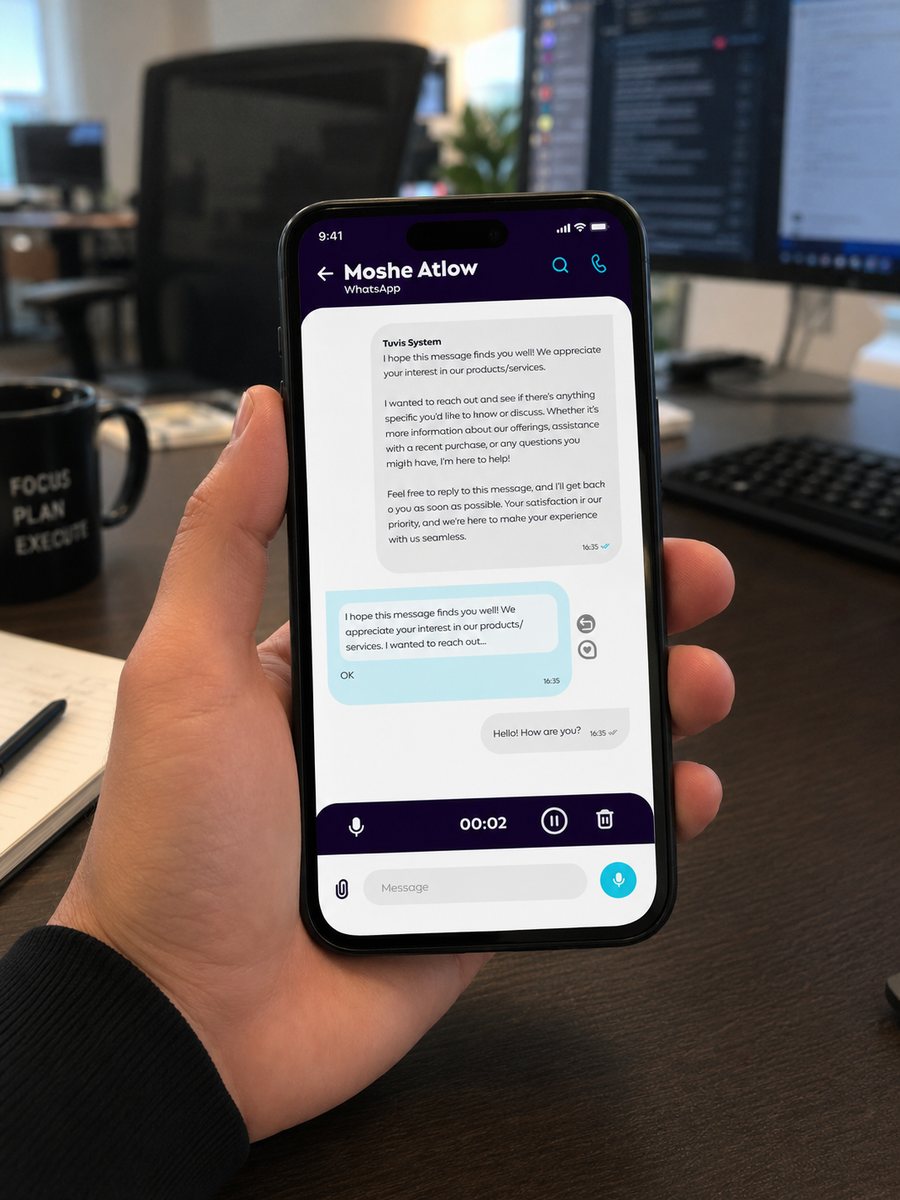
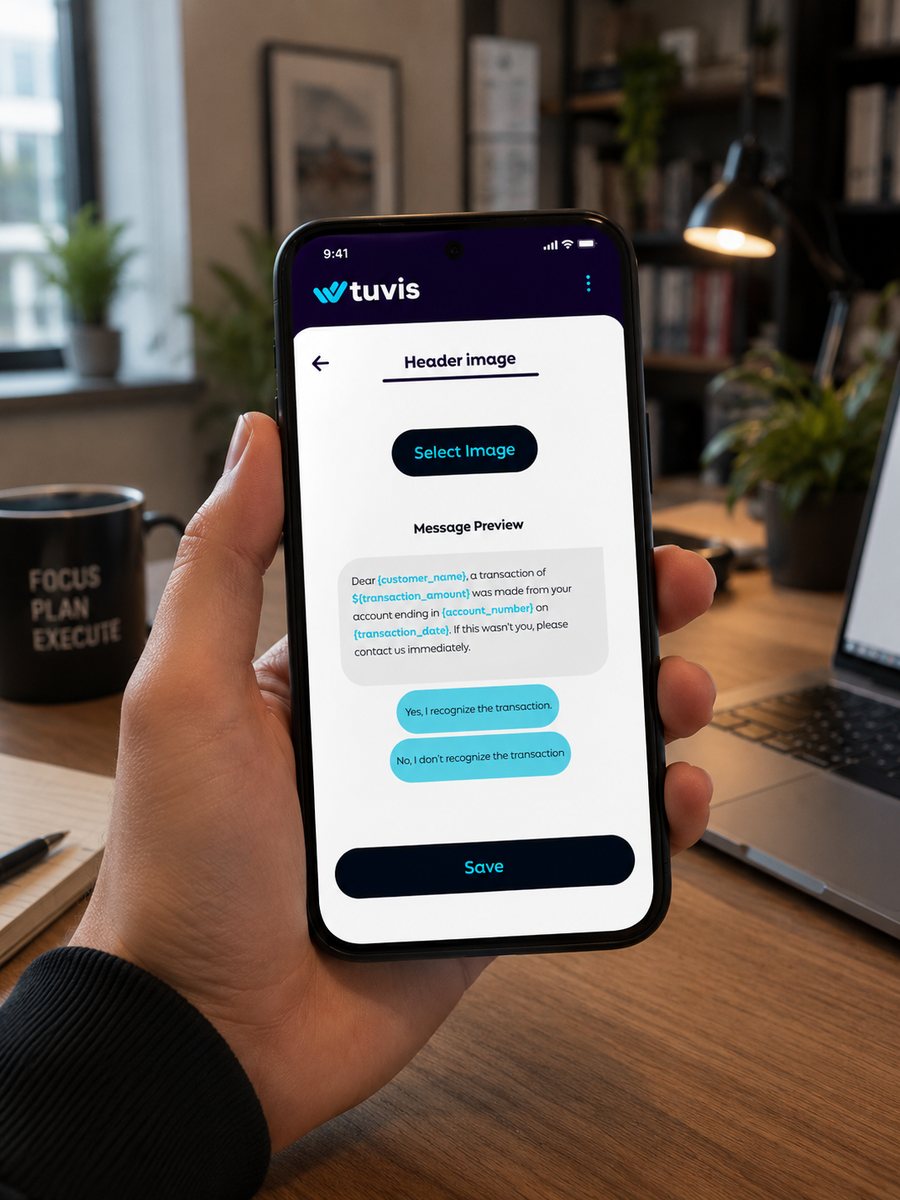
I decided to make business templates, sending to many chats, calls and SMS feel as natural as the apps people already use, instead of a compliance tool bolted on.
Feedback
What the client said.
Tuvis has significantly improved our day-to-day lives by providing a user-friendly interface and easy access to relevant customer information. The ability to generate active contacts on WhatsApp has boosted our retention and engagement, resulting in an overall increase in results.
Client company, Vivo