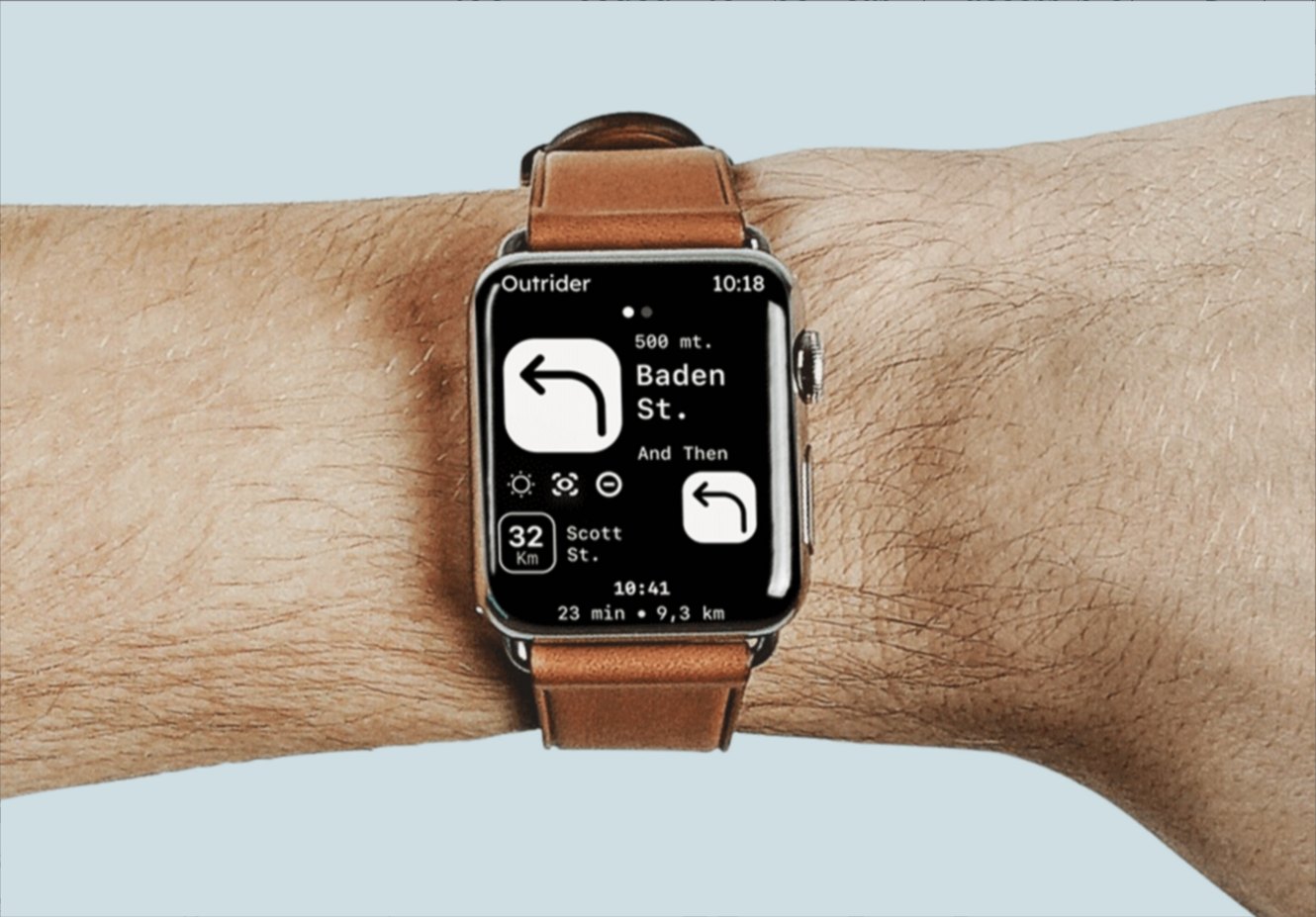
Smartwatch navigation that keeps a rider's hands on the handlebars
A self-initiated project: navigation that is safe and glanceable for urban motorcyclists, on the wrist instead of a phone.
Overview
Stopping to look at a phone is unsafe, and so is a phone mount.
I started Outrider to address a gap in accessible, safe navigation tools for motorcyclists, especially where stopping to consult a phone, relying on traditional motorcycle panels or using a phone support is impractical or unsafe.
So the navigation moved to the wrist.
The goal was a user-friendly, efficient and safe navigation tool with real-time GPS and trip information directly in a smartwatch interface: easily accessible, highly visible and minimally distracting, for riders in high-risk or complex urban environments.
Research
Understanding riders guided every stage.
I started with user interviews at the Interlagos Motorcycle Festival in São Paulo, one of the largest motorcycle festivals in Latin America, to uncover pain points and preferences. I also interviewed motorcycle dealers and brand ambassadors, and looked at gaps in smartphone navigation apps and built-in dashboards, and how people actually use them on a motorcycle. Being a motorcyclist and a smartwatch user myself also shaped a product that unites both worlds.
- Visibility and accessibility. A significant concern was having to take their eyes off the road to read navigation instructions.
- Safety. Riders were wary of phone mounts, because of theft risk and distraction, but a smartwatch app usually needs two hands, which is more dangerous even at low speed.
- Simplicity. People preferred a straightforward system: only essential information, high contrast and minimal detail, with minimal interaction.
Ideation and prototyping
A classic look with modern function.
I took inspiration from vintage motorcycle restoration and brat-style culture to find an authentic design direction. Sketching and wireframing explored layouts and interaction models for the watch. Then came a card sorting experiment and a heuristic evaluation of existing panel systems and curve-by-curve tripper systems, and an interactive Figma prototype simulating Outrider on a wearable, using the Apple Watch as the starting point.
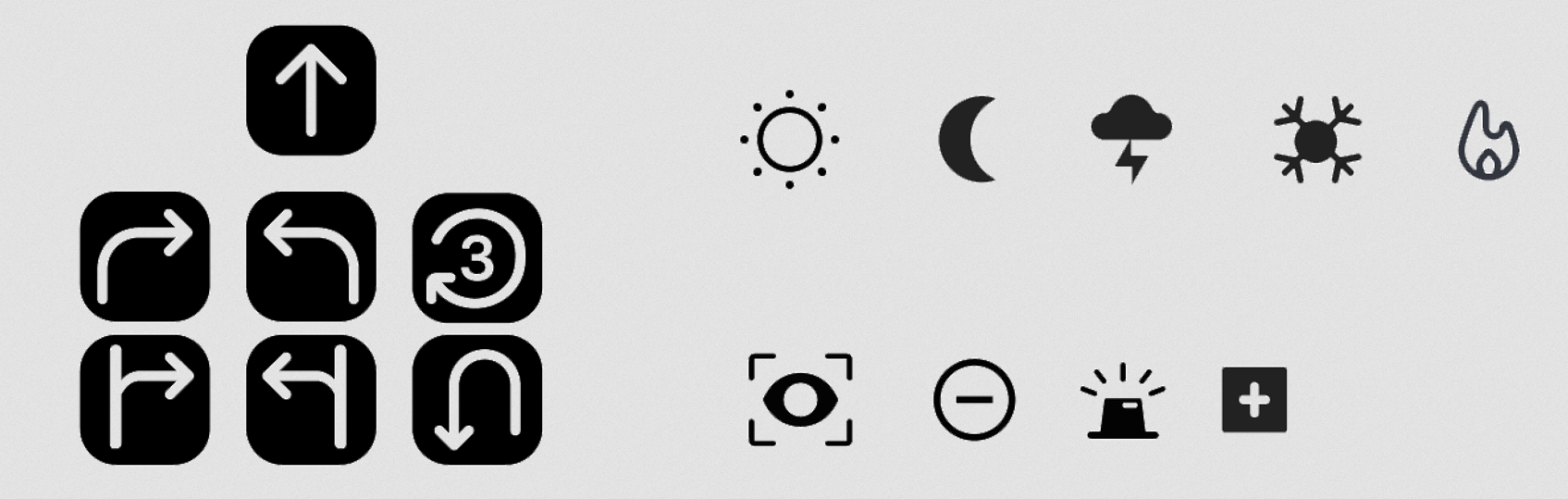
- A simple, glanceable UI. Large, easy-to-read directions and a minimal design for quick reading, without losing information.
- "Twist of the Wrist" gesture controls. The pronated turn of the wrist, which most smartwatches recognize, changes screens between curve-by-curve navigation and the mini map, so riders keep their hands on the handlebars.
Try the gesture: drag the grip
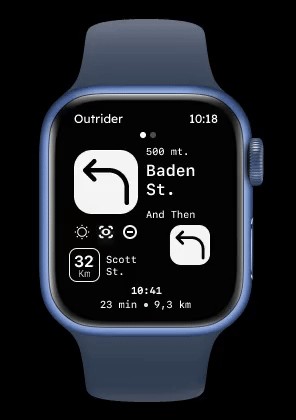
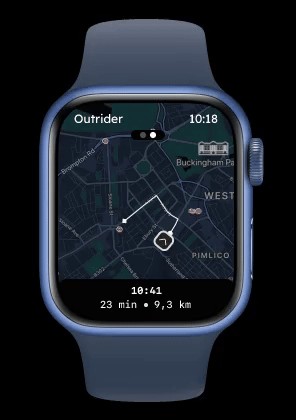
Curve-by-curve navigation. Always on, focused on the next action the rider needs.
Mini map. The second screen, one twist of the wrist away.
Drag the grip left or right with a mouse or a finger, or use the arrow keys. In Outrider, a turn of the wrist switches the screen, so hands stay on the handlebars.
Final design
High contrast, always on, and quiet.
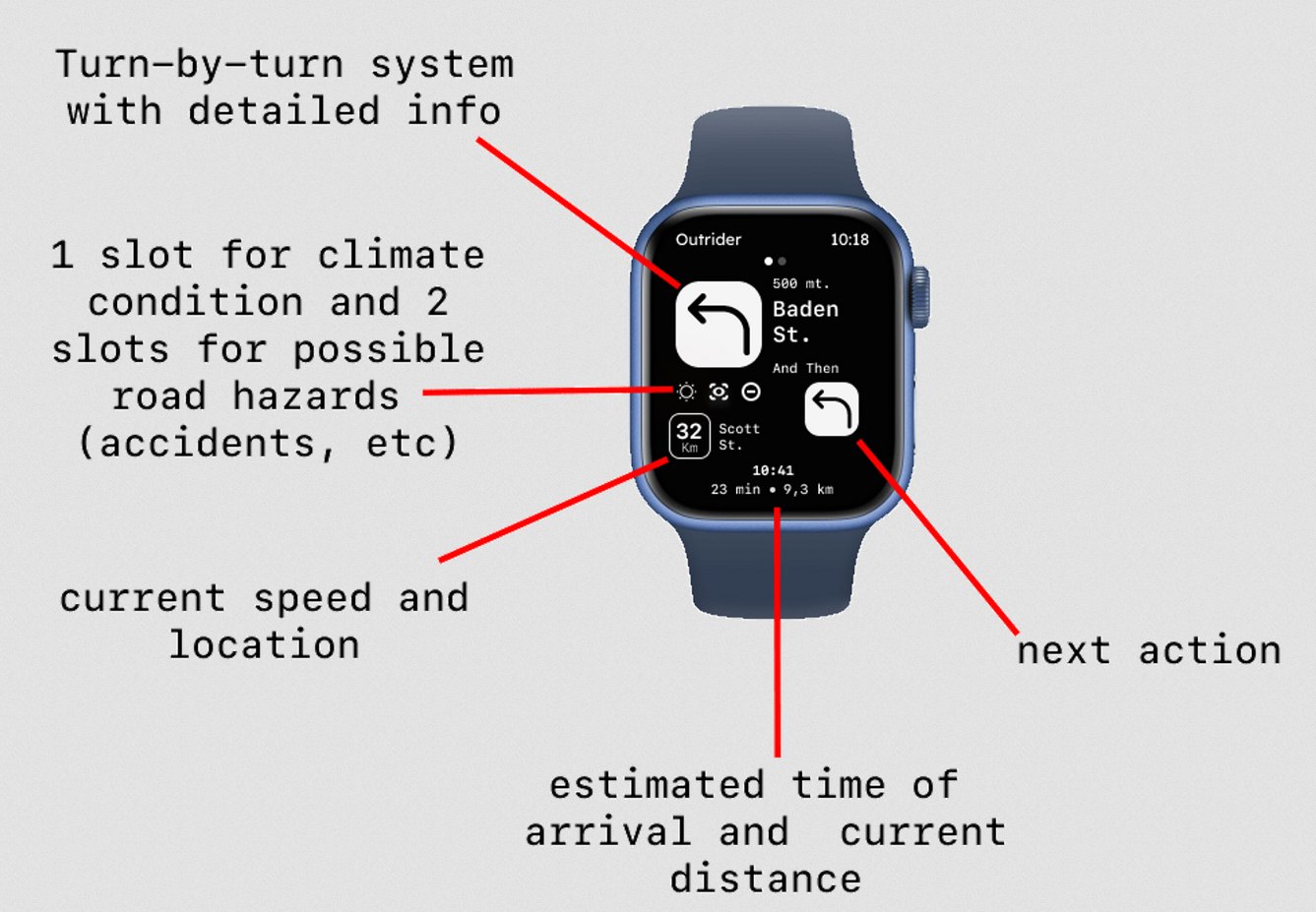
- High-contrast, minimalist interface. Legible in different lighting conditions, with less detail to save battery and avoid distraction.
- Turn-by-turn navigation. Always on and clearly displayed, focused on the next action the rider needs.
- Alerts and warnings. Vibrations for upcoming hazards or changing weather, so riders look at the screen less.
- Compatibility and a neutral profile. Outrider relies on existing apps and structures, using the watch's own design system and adapting it only where needed.
Testing
I tested it at the Interlagos Motorcycle Festival.
I took Outrider back to the festival where the research started, and showed the prototype to riders there, listening to what they made of it.
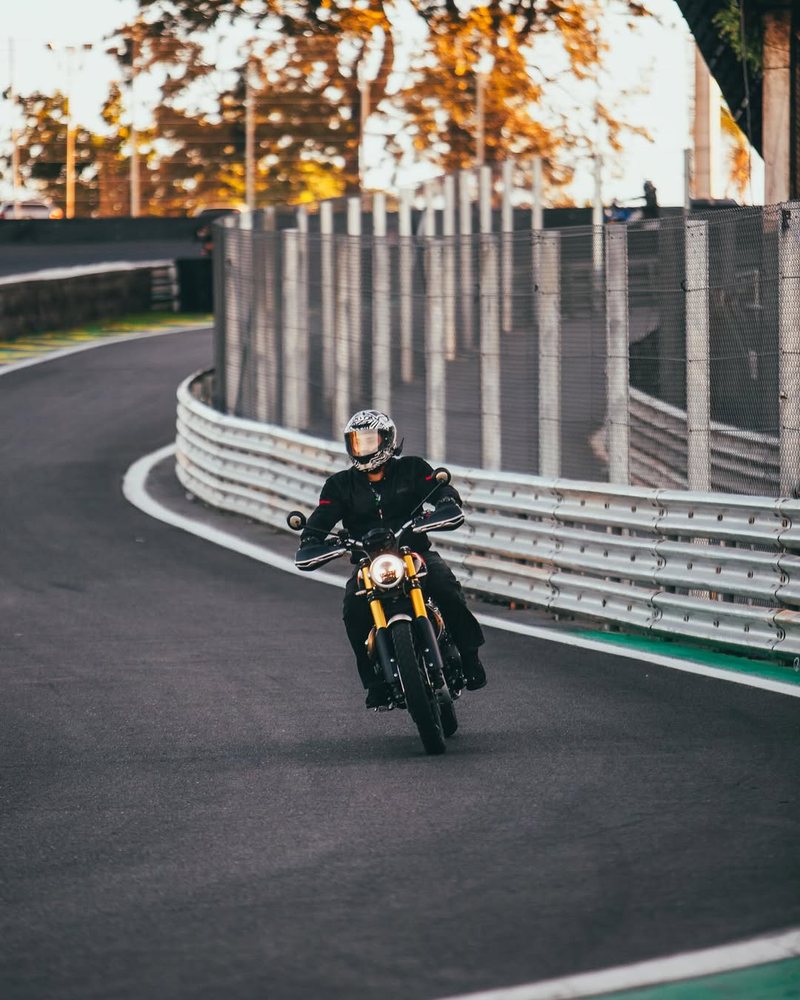
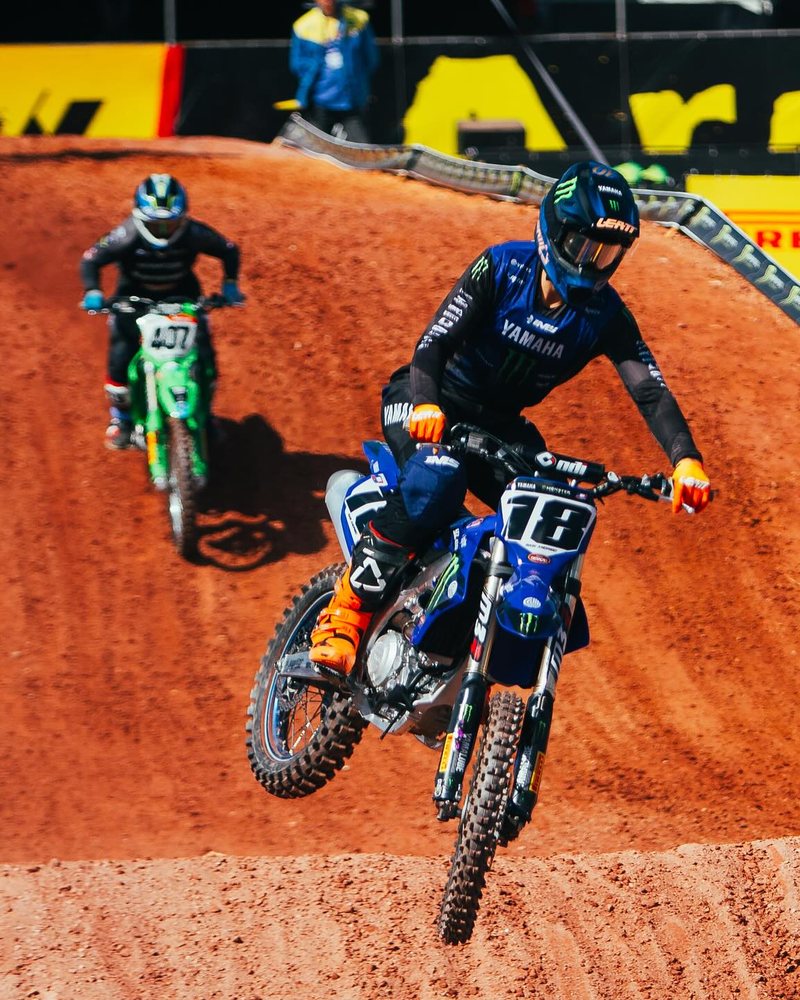
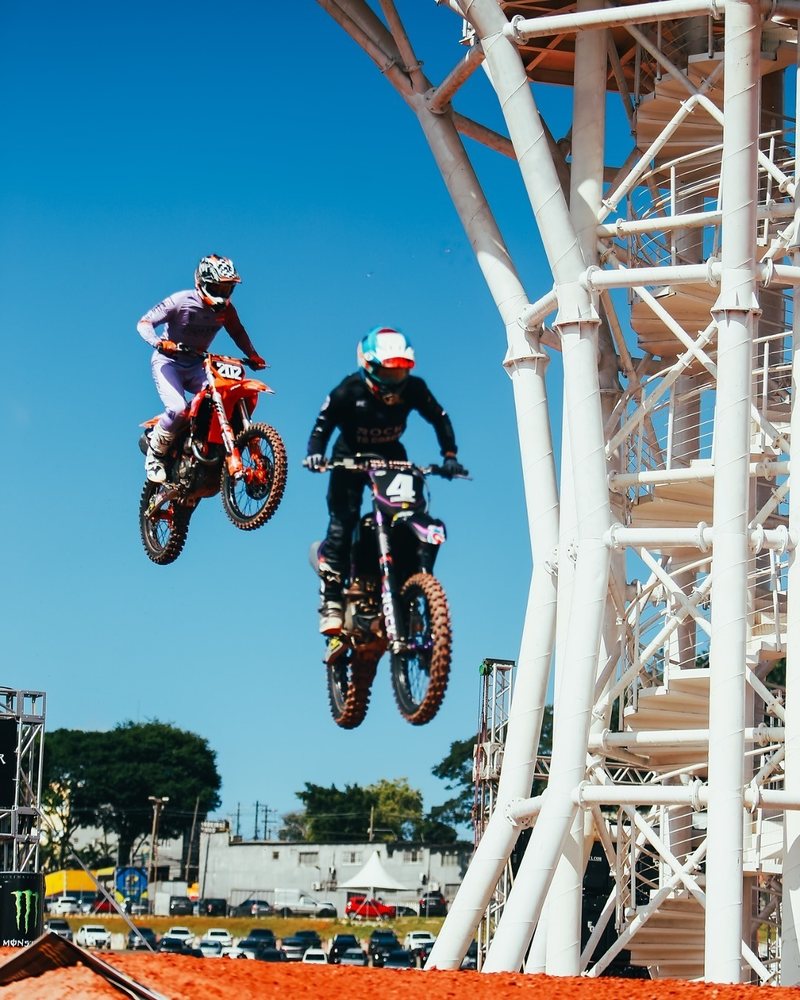
Photos: Festival Interlagos. Visit the site
Feedback
Riders responded well.
Outrider received very positive feedback from the motorcycle community. Riders said the system integration would make navigating dangerous or unfamiliar areas safer and more confident, without stopping or using their phones. In discussions, people especially appreciated the intuitive design and the practicality of the gesture controls.
It already fits casual riders and daily commuters. Delivery riders and moto-taxis are the next step, once their phone apps support smartwatches.