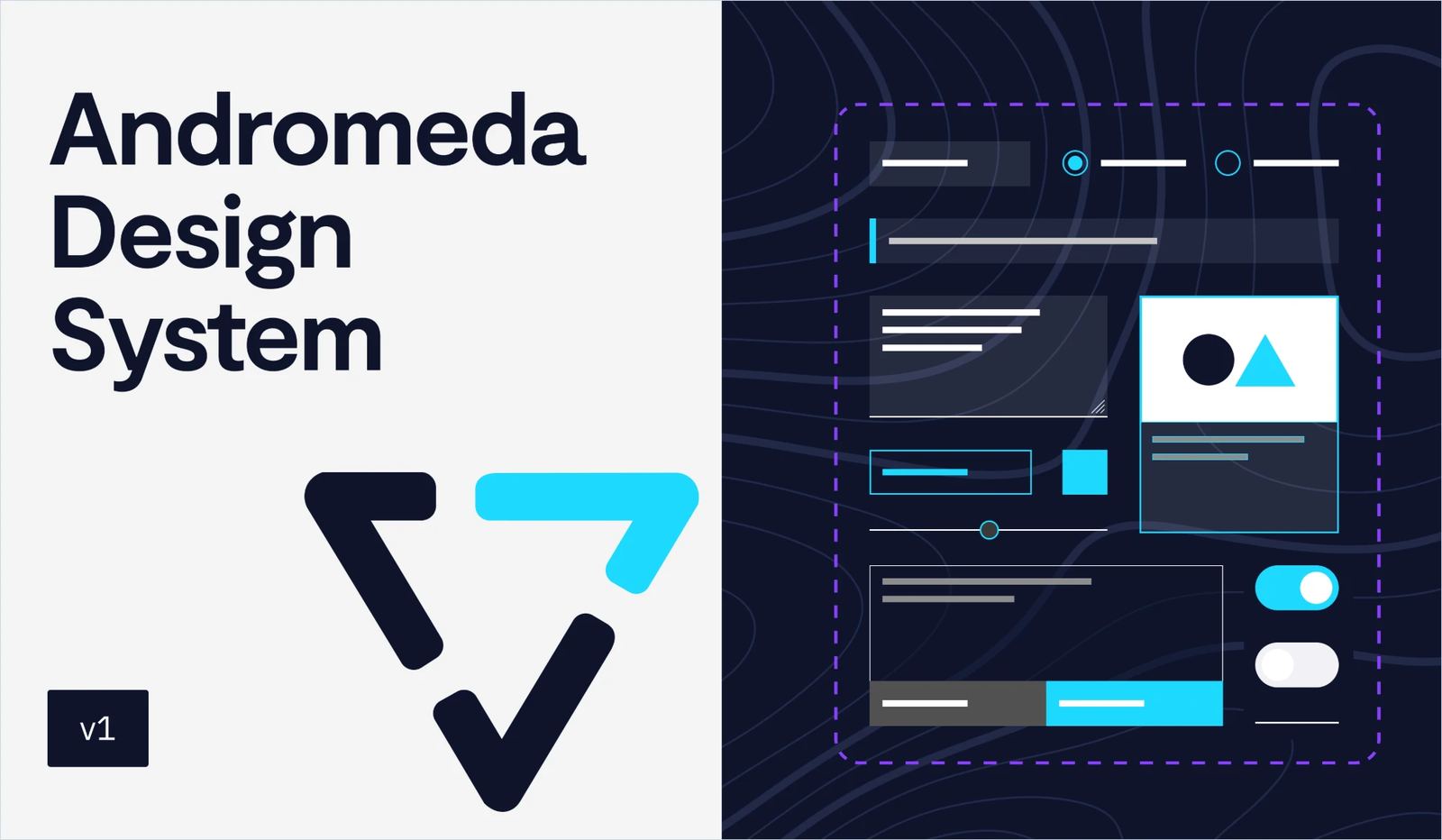
A design system built as a product, for VAST Data's product and marketing
Andromeda is a scalable design system for VAST Data's growing digital ecosystem. VAST Forward stretched it to an animated event site without breaking it.
Overview
VAST Data's digital ecosystem was growing faster than its UI patterns...
VAST Data builds infrastructure platforms that power large-scale AI workloads for enterprise organizations. As its digital ecosystem expanded, inconsistent UI patterns created friction between design and engineering teams.
...so I led the build of Andromeda, a design system that works as a product.
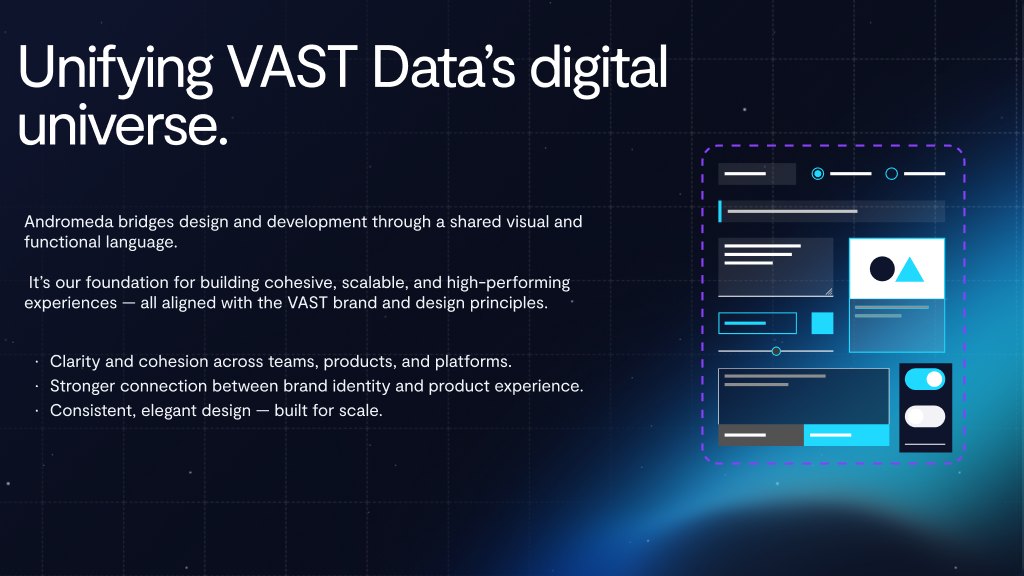
Rather than acting only as a UI library, Andromeda was designed to function as a product foundation: it lets teams build consistent interfaces faster while keeping flexibility for different kinds of experiences, from product interfaces to high-impact marketing pages.
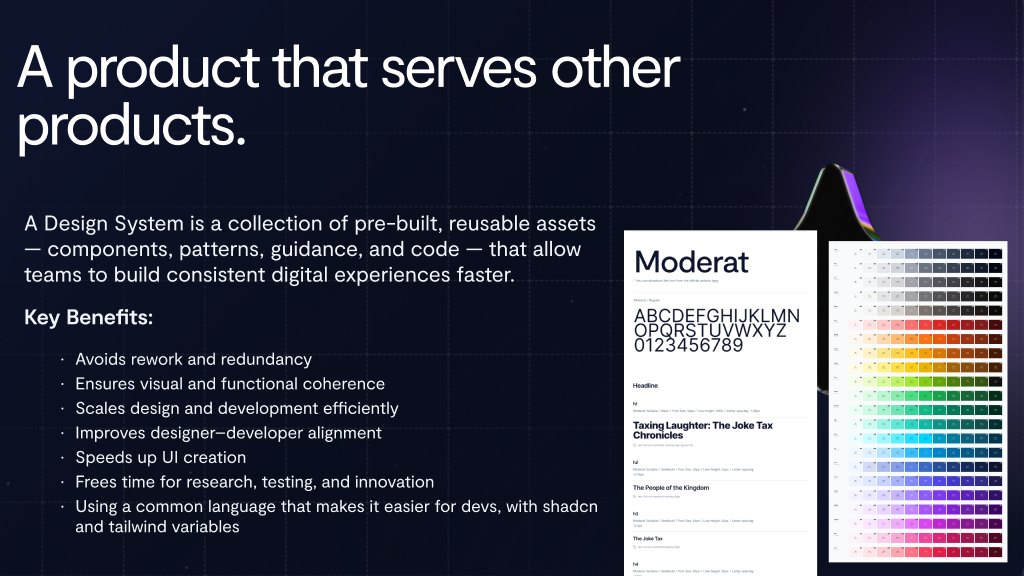
A design system is a product that serves other products.
My role
I owned the system as a product.
I directed VAST Data's digital rebrand, and creating Andromeda was part of it, so the brand stays cohesive across digital platforms. I set the structure, priorities and implementation strategy, working closely with engineers and stakeholders so the system matched real development workflows and long-term product needs.
- Design system architecture. Foundations and tokens, reusable UI components and scalable component libraries.
- DesignOps. Workflows for design and engineering collaboration, documentation and governance, and better handoff.
- Product support. Implementing Andromeda in real projects with Framer and Webflow, supporting the teams using it and keeping implementations consistent.
The problem
Before Andromeda, four things slowed the work.
- Fragmented UI patterns. Different teams recreated similar components independently, which meant visual inconsistencies and duplicated work.
- Design and engineering misalignment. Without a shared UI language, designers and developers often interpreted components differently.
- Slower production cycles. Every new product page or marketing experience meant rebuilding components from scratch.
- Scaling challenges. Without reusable patterns it was harder to keep a cohesive brand and product experience as the company grew.
Component architecture
Foundations first, then components that are modular, responsive and easy to build.
Once the foundations were set, I led a component-driven architecture: navigation systems, content cards, form inputs, call-to-action blocks, content sections and data display components.
VAST Forward
VAST Forward needed to feel unique without leaving the system.
VAST Forward is the company's flagship conference on AI infrastructure and enterprise data platforms. Unlike standard marketing pages, the event needed its own visual identity, highly animated interactions, immersive storytelling and engaging navigation through technical content, while staying compatible with Andromeda.
My goal was to balance creative freedom with system scalability, so I separated the system into three layers.
- Core system. Andromeda's shared foundations: color tokens, typography, layout grid, spacing and component primitives.
- Event components. Custom components built on Andromeda for the event: animated hero sections, session cards, speaker modules, agenda timelines and CTA blocks.
- Motion and interaction. Scroll-driven transitions, animated section reveals, motion-enhanced navigation and interactive visual elements.
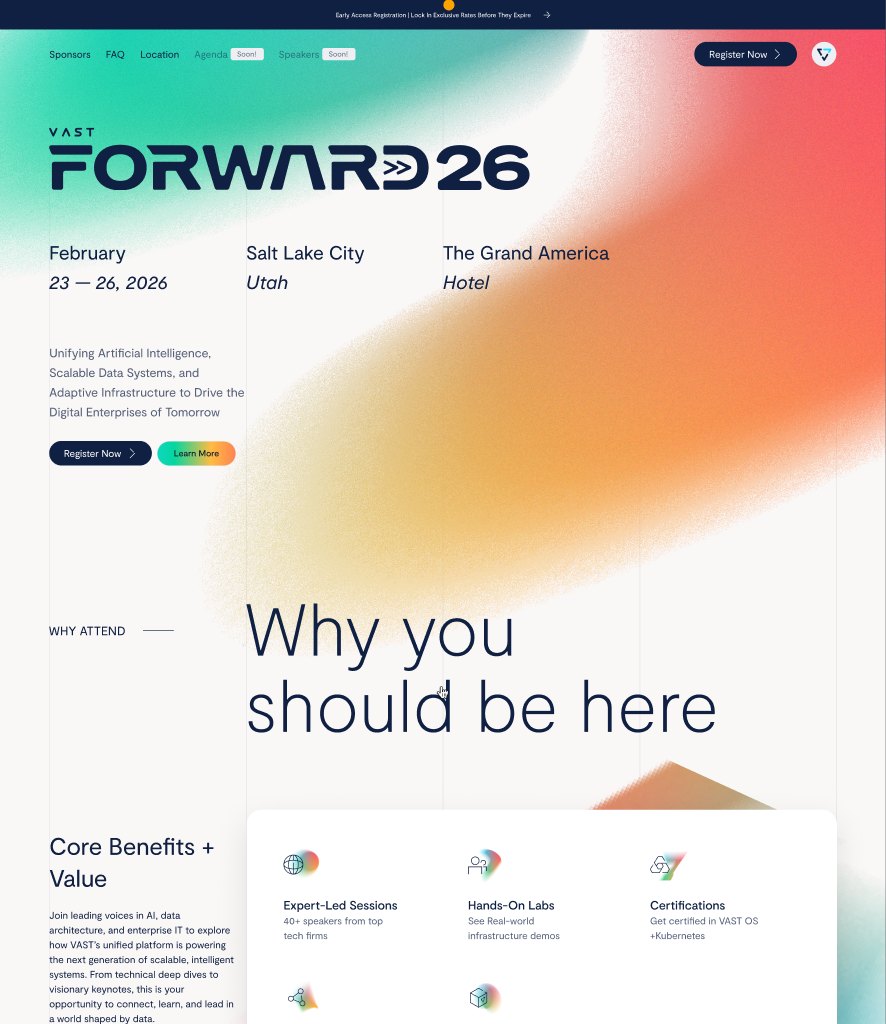
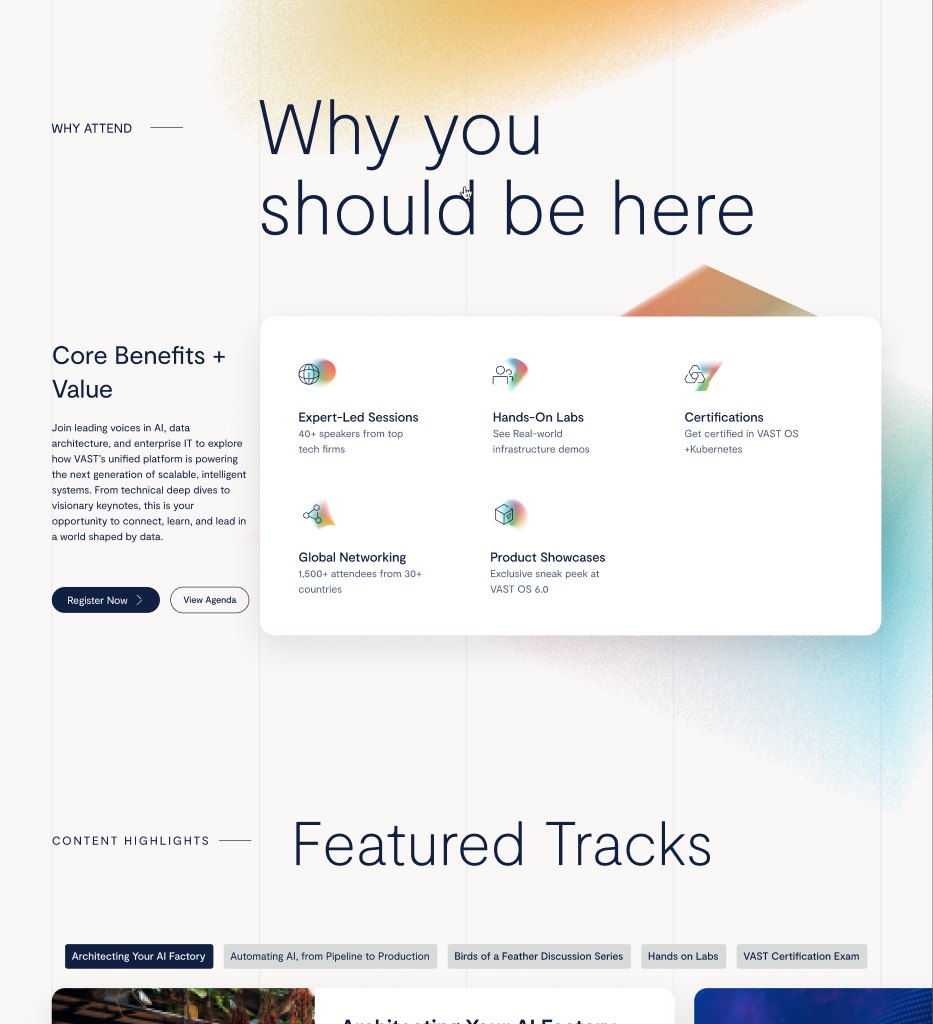
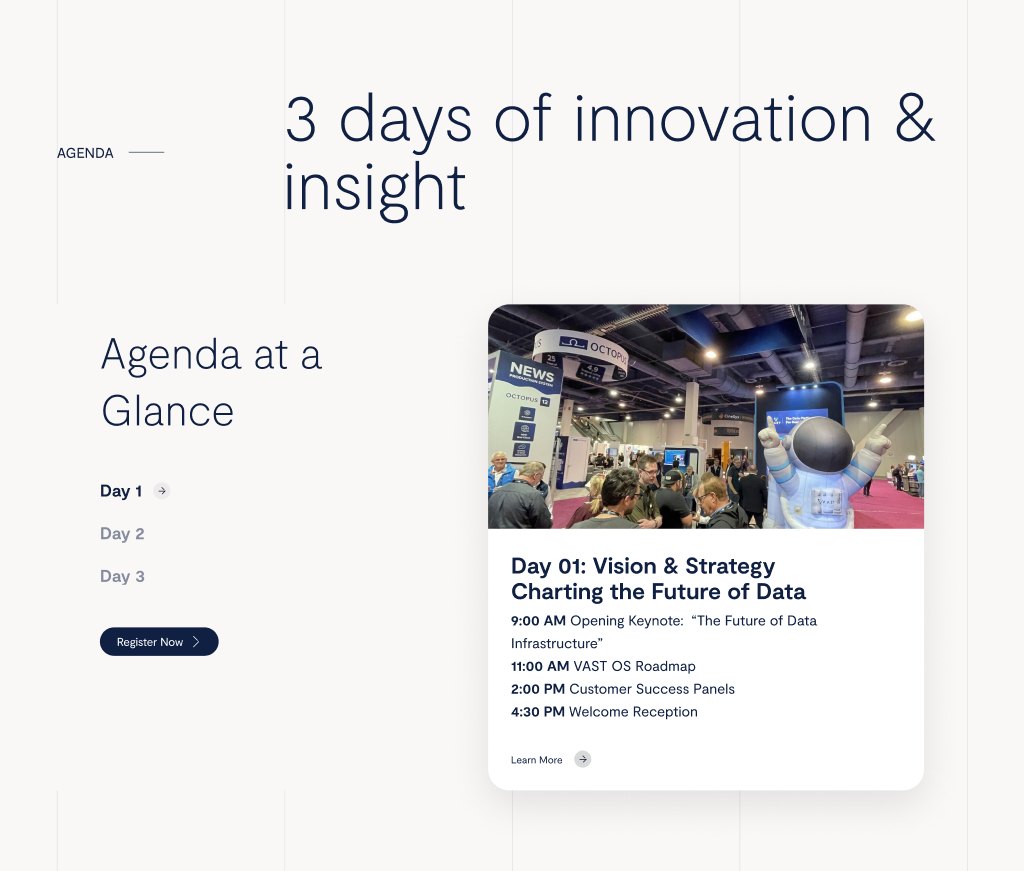
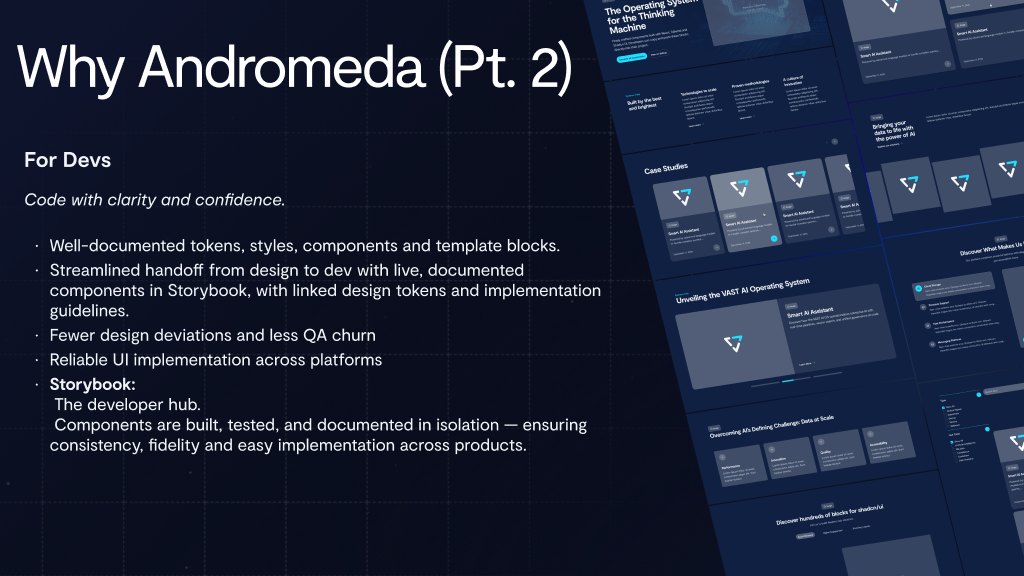
To support the build, I structured component-based Figma files, aligned components with Storybook libraries, documented reusable patterns and made sure design tokens matched the code.
Outcome
One visual language across products, marketing pages and campaigns.
- Shared tokens, reusable components and clearer documentation unified the visual language across products, marketing pages and campaign experiences, and cut duplicated work between teams.
- With designers and developers working from the same source of truth, rework and implementation mistakes dropped, and modular components shortened the design and development iteration cycle.
- VAST Forward left a scalable foundation for future VAST marketing experiences, reusable components for event and campaign pages, and virtual guidance for attendees and speakers.
Reflection
Design systems are not just UI libraries: they are organizational tools.
Andromeda worked because I built it as an organizational tool: close collaboration between design and engineering, clear documentation and governance, and room for both product and marketing needs. That room is what let a highly expressive experience like VAST Forward live inside the system without fragmenting it.